
Ursuline Sisters of Cincinnati – Founding Mothers
Ursuline Sisters of Cincinnati
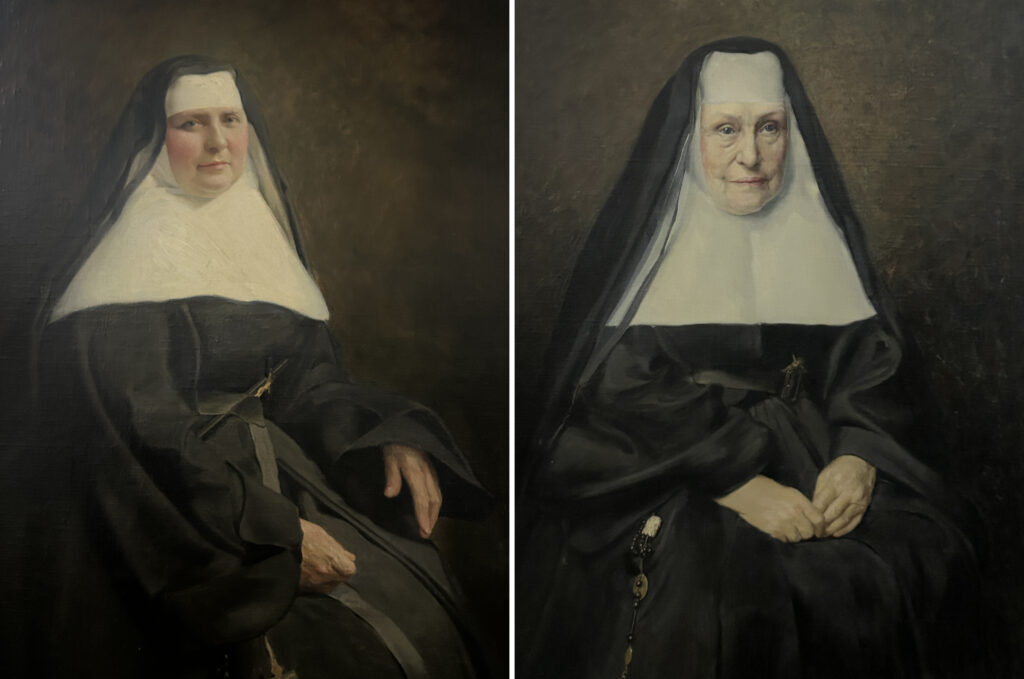
The origins of the Ursulines of Cincinnati are closely linked to the lives and labors of Mother Fidelis Coleman and Mother Baptista Freaner, whose combined gifts shaped the early development of the community. Working in close collaboration, they provided both the spiritual direction and the practical leadership needed to establish a stable foundation for the new mission in Cincinnati. Mother Fidelis, noted for her administrative ability and unwavering confidence in God’s Providence, supported and strengthened the work through her careful stewardship and tireless service. Mother Baptista, grounded in a deep interior life and a steadfast commitment to Ursuline ideals, offered vision and guidance during the community’s formative years. Together, their contributions formed the spiritual and institutional framework upon which St. Ursula Convent and Academy — and the Cincinnati Ursulines — would continue to grow.
Mother Fidelis
(Elizabeth Cecilia Coleman)
March 7, 1851 – May 6, 1918

Mother Fidelis (Elizabeth Cecilia Coleman), foundress of the Cincinnati Ursulines, was a gifted woman, a renowned educator and a dedicated religious whose deep faith and firm hope in God animated her life and that of the Cincinnati Ursulines.
Lizzie was born in 1851 in Louisville, Kentucky, to a prominent family. Her parents were Captain John Coleman and Margaret Banner Coleman and there were seven other children in the family. Lizzie received her education from the Ursulines in Brown County.
Following her graduation in 1869, Lizzie returned home to Louisville to work with her father. Captain Coleman soon realized that Lizzie had outstanding business ability and appointed her the executrix of the family estate. Despite being over 150 miles from Brown County, Lizzie remained devoted to the Ursulines helping them with their causes and making donations to the school and convent including financing the construction of a big barn which the sisters needed.
Mother Fidelis Coleman was an extraordinarily gifted leader. She entered the convent in 1888 at the age of thirty-seven and made her final profession of vows in 1891 and took the name Fidelis meaning “faithful.” Just a few years later she was elected treasurer of the community. Her fervent concern and efficient management in this office can be seen in a letter to her superior:
We have been working extremely hard but we don’t mind it for we are expecting the Good Lord to send us all we need, and I am certain He will.
Her “splendid business ability” was recognized by the community as well. Sister Margaret Lockwood, one of her fellow Ursuline Sisters, spoke of her “grasp of the financial needs of the community… practical insight and foresight and … energetic exertions.” These skills would be invaluable as in 1895 with the support of Archbishop Henry Moeller, Mother Fidelis, Mother Baptista and Mother Mary Berchmans began plans to open a day school in Cincinnati. On September 26, 1896 Ursuline Academy opened for classes. In addition to her administrative duties, Mother Fidelis also taught the primary grades.
Mother Fidelis Coleman’s deep dependence on God continued to grow as her responsibilities increased. Mother Fidelis was elected superior of the Brown County Ursulines in 1907. The greatest test of her confidence in God, her loyalty to the church and to her community came when Archbishop Moeller approved her founding a new Ursuline community in Cincinnati. In 1910, she along with Mother Baptista Freaner and eighteen other sisters founded St. Ursula Convent and St. Ursula Academy. Mother Fidelis was elected superior of the Cincinnati Ursuline community. Her faith is seen again in her words to the sisters,
“Our reliance must continue to be on Divine Providence which has so signally watched over us in the past and will, we trust, reward our confidence with care in the future.”
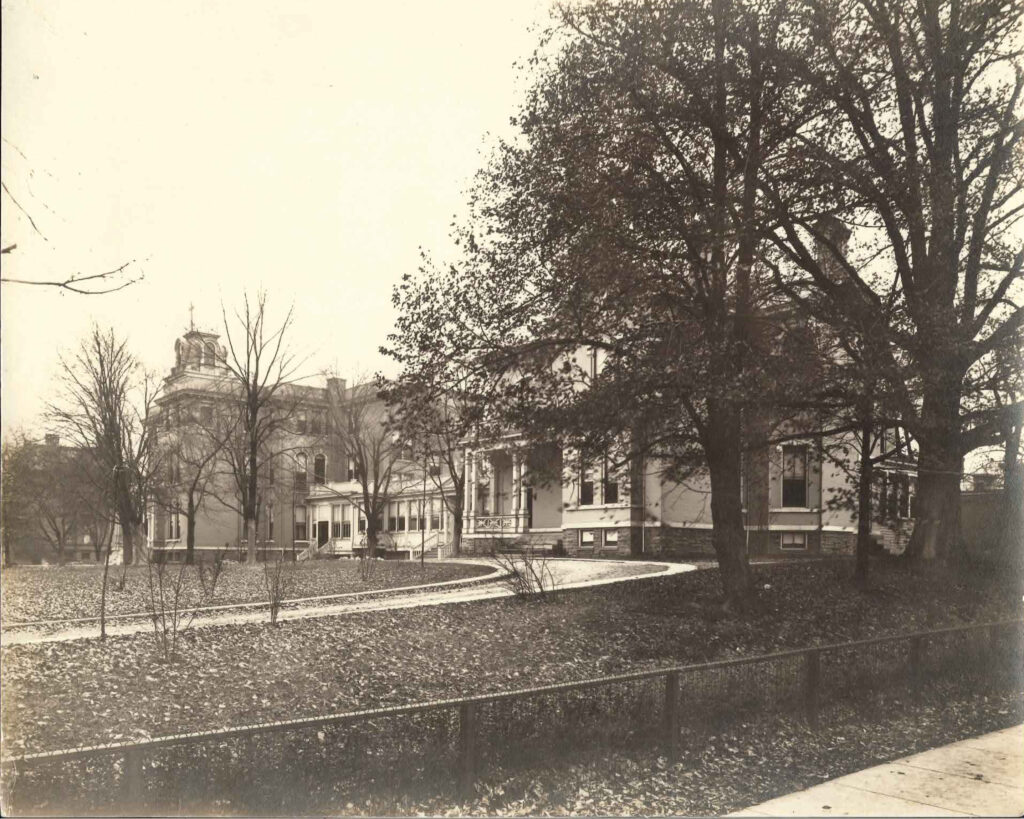
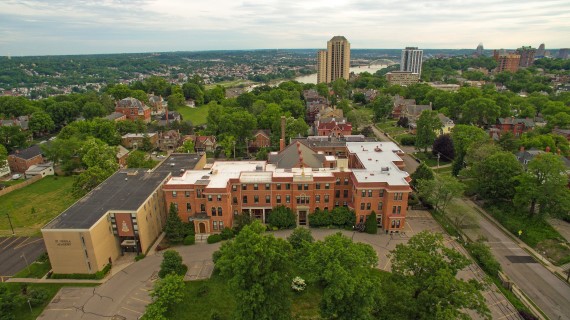
In the first eight years of the community’s existence, St. Ursula Convent and Academy were firmly established at its present McMillan street address. The beautiful chapel was built and dedicated in 1916 under Mother Fidelis’ direction.
Mother Fidelis died in 1918. Friends, clergy, relatives, alumnae and civic leaders gathered in the chapel on May 8, 1918, to celebrate the life of Mother Fidelis, a beloved sister whose influence extended far beyond her convent. One newspaper account praised Mother Fidelis as “Above all things Mother Fidelis labored to be found faithful – to those who claimed her friendship, to her Community and to her God.” Dignified and reserved, Mother Fidelis was gentle, friendly and loving and her spirit remains ever-present at Saint Ursula Academy.
Information on Mother Fidelis obtained from Joanne Elsbrock’s In Good Company, Mary-Cabrini Durkin’s Planted in God’s Vineyard: The Story of the Ursulines of Cincinnati, the Ursulines of Cincinnati Archives and Mary Jerome Buchert, OSU.
Mother Baptista
(Susan South Freaner)
February 2, 1843 – June 2, 1939
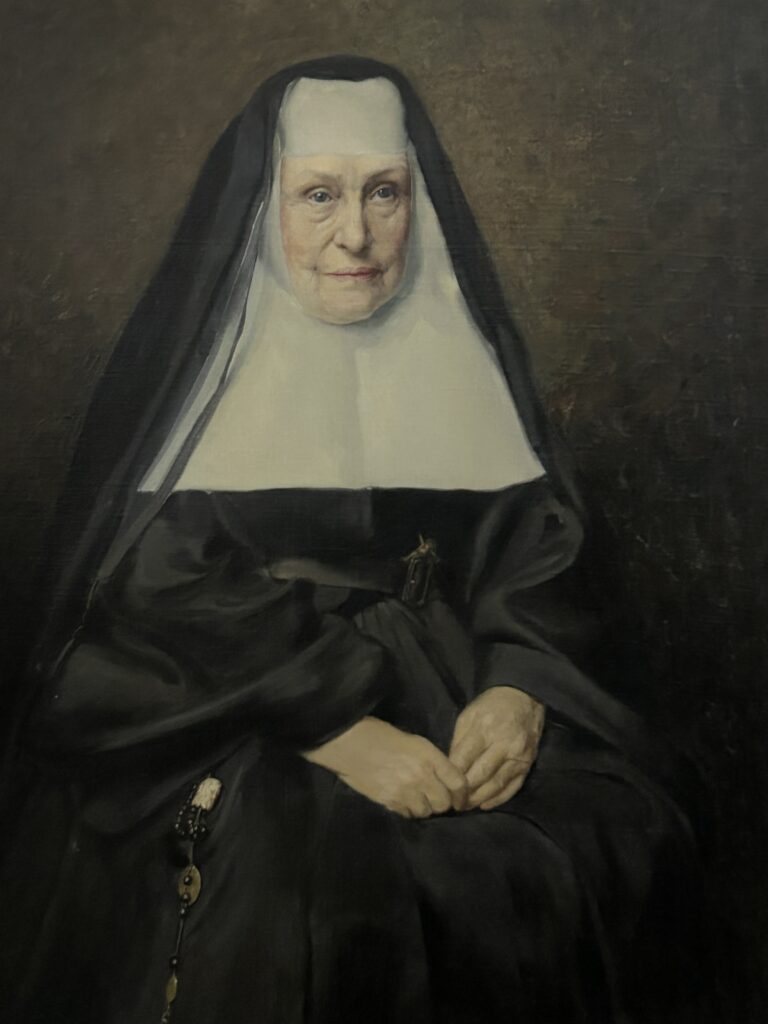
Susan South Freaner was born in Hagerstown, Maryland on February 2, 1843, to Henry and Sarah Chambers Freaner. She was the only girl in a family with seven boys. Her mother died when she was four, and she was sent to live with an aunt in Newton, Ohio. When Susan was twelve, her aunt convinced her father to send her to board at the Ursuline School and Convent in Brown County, Ohio. Her years there (1855-1859) were a time of joy for Susan. Her time with the Ursuline sisters was also her first contact with Catholicism, and in her junior year she was baptized a Catholic on May 22, 1858 with Bishop John Baptist Purcell serving as her godfather.
When Susan graduated, she returned home to Maryland. The Civil War had just begun. Two of her brothers had joined the Confederate Army while her father and five other brothers had joined the Union Army. Meanwhile the household moved to Frederick, Maryland, an area that would see fighting and significant movement of troops during the early years of the Civil War. Susan volunteered and became a nurse and served at several battlefield hospitals. After battles, she and a hired driver would point the horse in the direction of the day’s gunfire, load wounded soldiers from both sides into their wagon and convey them to the improvised field hospital in her family’s home. She said later that the hardest thing for her was turning over the soldiers who had fallen, whether Union or Confederate, to see if they were wounded or dead.
After the war, despite the opposition of her Protestant relatives, Susan returned to Brown County and studied to become a sister. She professed her vows as an Ursuline on May 1, 1870 at the age of 27 and took the name Baptista in honor of her godfather. Sister Baptista was a beloved teacher of religion and painting, and she wrote Fifty Years in Brown County Convent. She soon stepped into leadership roles, and seven years after taking her vows she became the principal of the Brown County school and was elected Zelatrice.* Mother Baptista served as Mother Superior for the Ursulines of Brown County in 1889 and 1898. She was also part of the group that opened Ursuline Academy in Cincinnati in 1896. Together with Mother Fidelis, they purchased the buildings and developed the Academy’s curriculum. She was soon named Directress of Ursuline Academy while retaining her position as Assistant Superior of the Brown County Ursulines. The school flourished, building on the Sisters’ reputation for educational excellence. In 1908, she was serving as both the community’s treasurer and novice mistress.
In 1910, Mother Baptista joined Mother Fidelis Coleman in founding Saint Ursula Convent and Academy in Cincinnati. She and Mother Fidelis formed the leadership of the new Ursuline order, and she was the first principal of Saint Ursula Academy. “On the seventeenth day of September we opened school with 63 pupils quite filling the classrooms. By the close of that year we had 80 pupils.” (from 1910 Annals)
In 1916, Mother Baptista became the superior of the community. After Mother Fidelis died, despite her own grief, she sustained the sisters. Mother Baptista served as the novice mistress of the Cincinnati Ursulines for 30 years and in that time she placed her stamp on the community by emphasizing among the novices a dedication to prayer, to the educational apostolate for modern women, and to the local Church.
Like Saint Angela Merici, Mother Baptista was an inspiration to many. As a 90-year-old sister, she still visited classrooms and made history come alive by sharing her experiences of the Civil War. Mother Baptista died in 1939 at the age of 96 after 71 years of religious life. She was loved by the students, the Sisters, the alumnae, and the many laypersons whose lives she touched. Those who knew her would agree with the words Theodore Roosevelt had said of her: “She was a woman in a million.”
Information on Mother Baptista obtained from Joanne Elsbrock’s In Good Company, Mary-Cabrini Durkin’s Planted in God’s Vineyard: The Story of the Ursulines of Cincinnati, the Ursulines of Cincinnati Archives and Mary Jerome Buchert, OSU.
*The Zelatrice was a role assigned to one of the members of the Council. The Superior and 4 counselors were elected by the Community. They were ” the Council” – officers of the Community. The Zelatrice was charged to care for the seal of the sisters. She watched that individuals were sincere in their practice of religious life – such as coming to prayers regularly and on time, not falling asleep during meditation, keeping the times of silence, being kind to others etc. According to Sister Mary Jerome, “She was ‘the virtue guard!’ When I entered Mother Rita was Zelatrice. We would kid around about her: ‘Here comes Rita, get your act together!’ She was the official Snitch! After Vatican II that official role in the Community was dropped. As well as I remember, Rita was the last one for us.”
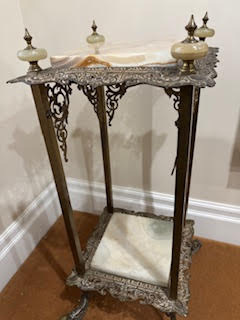
Artifact Spotlight
The Credence Table
The Ursulines of Cincinnati brought this credence table with them to their home on McMillan Street in 1910. It was used in the Ursulines’ first chapel in the parlors. The bread and wine rested on this table before the consecration.